📋 Quick Answer: What Is Serviced Accommodation?
Serviced accommodation is a fully furnished property — such as an apartment, house, or studio — available for short or long-term rental, combining the space and comfort of a home with hotel-style services like cleaning, Wi-Fi, and guest support. In the UK, it is used by business travellers, contractors, families, and tourists as an alternative to hotels. As of 2026, all serviced accommodation operators in England must prepare for a mandatory national registration scheme, and the Furnished Holiday Let (FHL) tax regime has been abolished since April 2025.
The UK property rental market has transformed dramatically over the past five years, and serviced accommodation sits at the centre of that shift. Positioned between a traditional hotel and a long-term rental, it offers guests more space, more flexibility, and a home-like experience — at competitive rates.
For property owners, serviced accommodation remains one of the highest-yielding strategies available. But in 2026, the regulatory landscape is changing significantly. The UK government’s national short-term let registration scheme is rolling out in England, the Furnished Holiday Let (FHL) tax regime was abolished in April 2025, and planning rules are tightening across major cities.
Whether you’re considering booking serviced accommodation or running it as a business, this guide covers everything you need to know — from how it works and who uses it, to the latest legal requirements for 2026.
Defining Serviced Accommodation
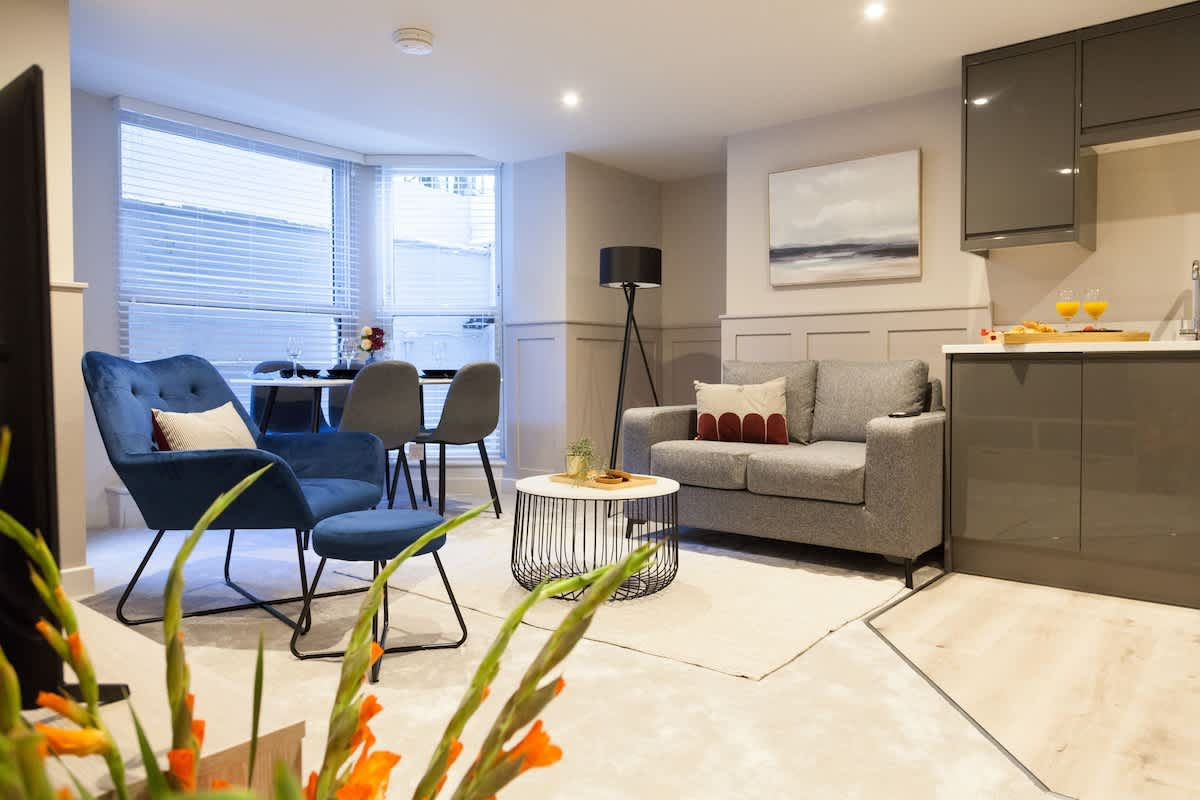
Serviced accommodation represents a hybrid lodging solution that combines the comfort of home with professional hospitality services. These fully furnished properties operate as short-term rentals with enhanced amenities and guest support services that distinguish them from standard holiday lettings.
Key Features of Serviced Accommodation
Serviced accommodation provides fully furnished living spaces that guests can occupy immediately upon arrival. These properties include complete kitchen facilities, living areas, and bedroom suites with all necessary furnishings provided.
Professional housekeeping services form a cornerstone of serviced accommodation. Properties receive regular cleaning, linen changes, and maintenance throughout guest stays. This service level mirrors hotel standards whilst maintaining residential comfort.
Properties offer flexible booking periods ranging from single nights to several months. This flexibility attracts business travellers, relocated workers, and extended-stay guests who require temporary housing solutions.
Enhanced amenities distinguish serviced accommodation from basic rentals. Properties typically include:
- High-quality furnishings and decor
- Premium bedding and towels
- Welcome packages with refreshments
- Technology such as Wi-Fi and entertainment systems
- Keyless or smart entry systems for flexible self check-in
- 24/7 guest support services
Serviced Accommodation Versus Traditional Rentals
Traditional long-term rentals operate under six to twelve-month tenancy agreements with fixed monthly rates. Serviced accommodation functions on nightly or weekly pricing structures that command significantly higher revenue per night.
Management intensity differs substantially between the two models. Traditional rentals require minimal ongoing involvement once tenants move in. Serviced accommodation demands continuous guest turnover management, cleaning coordination, and booking administration.
Target markets vary considerably. Traditional rentals serve local residents seeking long-term housing. Serviced accommodation caters to business travellers, tourists, contractors, and individuals requiring temporary accommodation during relocations.
Regulatory requirements create additional complexity for serviced accommodation. Properties often require commercial mortgages, specialist short-let insurance policies, and planning permission. Since April 2025, the Furnished Holiday Let tax regime no longer applies — income is now taxed as standard property income. Traditional rentals typically operate under standard buy-to-let mortgage arrangements.
Comparison With Serviced Apartments
Serviced apartments represent a specific category within the broader serviced accommodation sector. These properties focus exclusively on apartment-style accommodation with hotel-standard services and professional management companies.
The terms serviced accommodation and serviced apartments are often used interchangeably, though serviced accommodation encompasses a wider property range. This includes houses, apartments, and alternative property types converted for short-term letting.
Service levels in serviced apartments typically match hotel standards with daily housekeeping, concierge services, and on-site facilities. General serviced accommodation may offer more basic service packages depending on the property type and target market.
Pricing structures for serviced apartments generally reflect their premium positioning and comprehensive service offerings. Standard serviced accommodation can operate across various price points depending on location, property quality, and service level provided.
Serviced Accommodation vs Other Property Types: At a Glance
| Serviced Accommodation | Hotel | Airbnb | Traditional Rental | |
|---|---|---|---|---|
| Furnished | ✅ Fully | ✅ Fully | ✅ Usually | ❌ Sometimes |
| Kitchen | ✅ Full kitchen | ❌ Limited/none | ✅ Usually | ✅ Yes |
| Cleaning included | ✅ Regular | ✅ Daily | ❌ Varies | ❌ No |
| Typical stay length | 1 night – 6+ months | 1–7 nights | 1–30 nights | 6–12 months |
| Pricing basis | Nightly/weekly | Nightly | Nightly | Monthly |
| Management required | High (active) | N/A | Medium | Low (passive) |
| 2026 UK registration | Required | Not required | Required | Not required |
How Serviced Accommodation Works
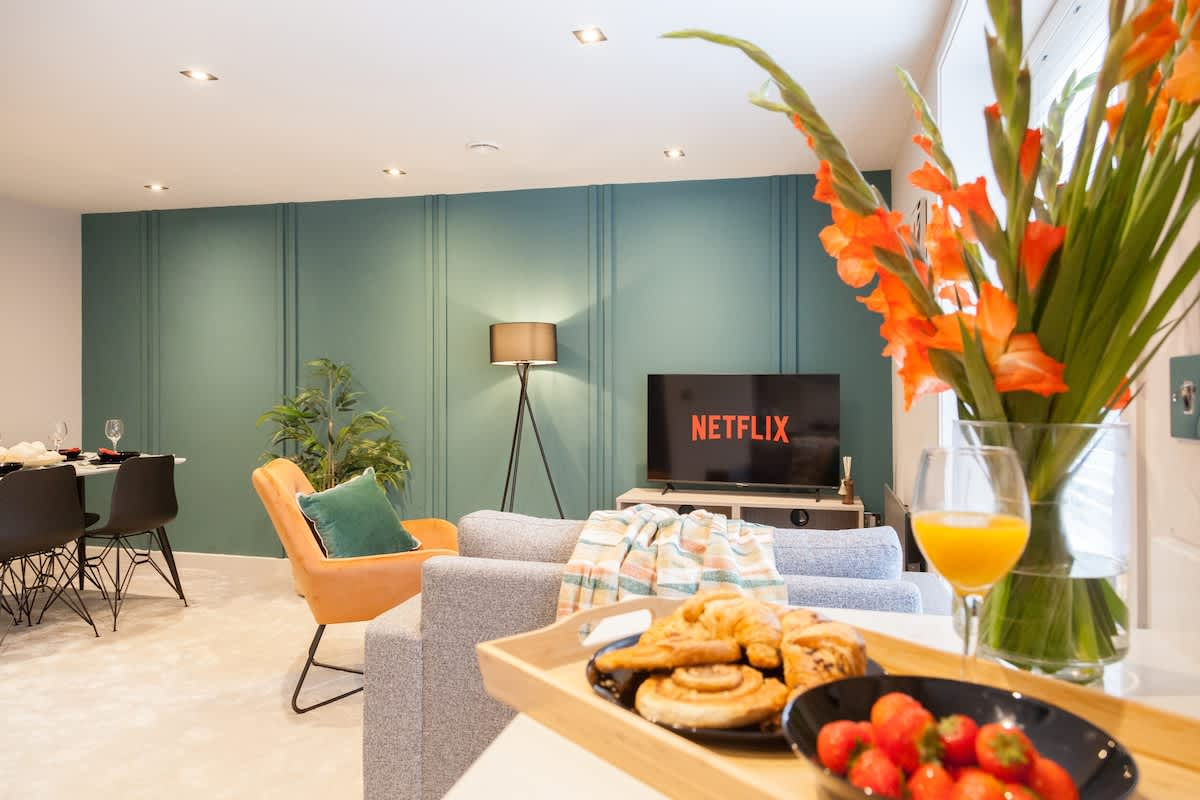
Serviced accommodation operates through streamlined booking systems and provides comprehensive guest services that blend hotel convenience with apartment-style living. Modern technology platforms manage everything from reservations to keyless entry systems.
Types of Serviced Accommodation in the UK
Serviced accommodation covers a broad range of property types. Understanding the differences helps guests find the right option — and helps operators position their property correctly.
Serviced apartments are the most widely recognised type. These are self-contained flats managed to hotel standards, popular in city centres with business travellers and corporate clients. They offer separate living areas, full kitchens, and regular housekeeping.
Serviced houses are larger properties suited to families, groups, or long-stay contractors. These offer multiple bedrooms and full residential facilities, often at a lower cost per head than equivalent hotel rooms.
Studios and apart-hotels are compact units combining a sleeping area with a kitchenette. Common in central London and major cities, these offer hotel-like consistency at an apartment price point.
Corporate or executive suites are premium serviced units designed for senior business travellers. These offer upgraded furnishings, faster broadband, and dedicated workspace areas.
Short-term contractor accommodation is often taken on a weekly or monthly basis by tradespeople, medical staff, or project workers based away from home. These bookings tend to be reliable and longer-staying, making them attractive to operators.
Understanding which type suits your needs — or which type you intend to operate — affects everything from planning permission to insurance requirements.
Guest Experience and Services Provided
Serviced accommodation combines the comfort of home with professional hospitality services. Properties come fully furnished with equipped kitchens, living areas, and separate bedrooms.
Standard services typically include:
- Weekly housekeeping
- Fresh towels and linens
- Complimentary Wi-Fi
- 24/7 customer support
- Utility bills included in the rate
Many providers offer additional services like grocery shopping, laundry, and concierge assistance. Business travellers often receive dedicated workspace areas and high-speed internet.
The check-in process is usually contactless. Guests receive access codes or key cards before arrival, allowing flexible arrival times without front desk requirements.
Technology Integration in Serviced Accommodation
Modern serviced accommodation relies heavily on technology to enhance guest experience and streamline operations. Property management systems handle bookings, payments, and guest communications automatically.
Smart home features commonly include:
- Keyless entry systems
- Automated temperature control
- High-speed broadband
- Smart TVs with streaming services
Mobile apps allow guests to report issues, request services, or extend their stay directly from their phones. Many providers use automated messaging systems to send check-in instructions and local area information.
Digital key systems eliminate the need for physical key exchanges. Guests receive access codes via text or email, making arrival and departure completely self-service.
Target Audiences and Typical Users
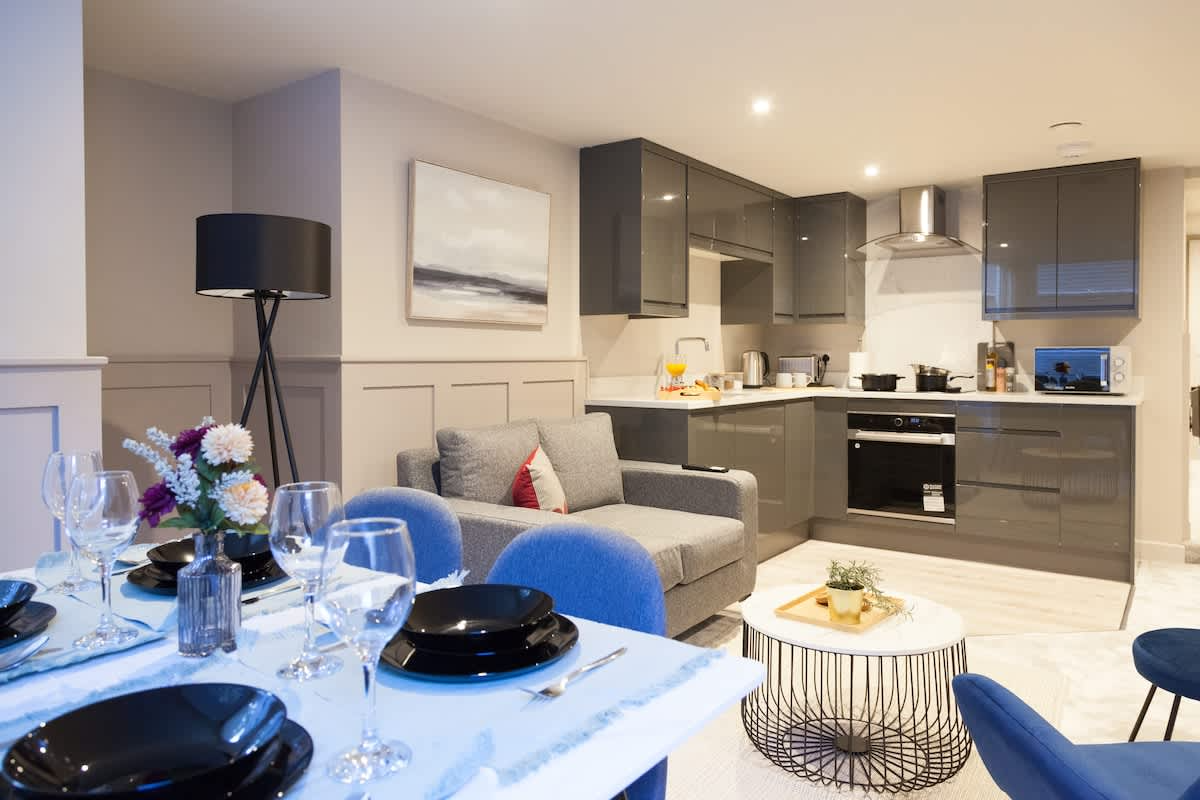
Serviced accommodation attracts two primary guest segments: holidaymakers seeking comfortable, home-like spaces for leisure trips, and business travellers requiring flexible, professional accommodation for extended stays.
Holidaymakers and Leisure Travellers
Holidaymakers represent a significant portion of serviced accommodation guests. These travellers choose serviced apartments for longer holidays where traditional hotels become expensive and restrictive.
Families particularly value the space and amenities. A typical family can cook meals, do laundry, and enjoy separate bedrooms whilst maintaining privacy. This saves money on dining out and provides comfort for children.
Group travellers find serviced accommodation ideal for reunions or celebrations. Multiple bedrooms and communal living areas allow groups to stay together affordably. We often see this with:
- Wedding parties
- University friends’ reunions
- Extended family holidays
- Sports teams and supporters
Long-stay holidaymakers prefer the flexibility serviced accommodation offers. Those staying one week or longer appreciate having proper kitchen facilities and living spaces. This includes digital nomads, seasonal workers, and people exploring areas before relocating.
The home-like environment appeals to holidaymakers who want local experiences rather than hotel anonymity.
Business Travellers and Corporate Clients
Corporate clients form the backbone of many serviced accommodation businesses. Business travellers increasingly choose serviced apartments over hotels for extended assignments and project work.
Extended business stays drive significant demand. Employees on assignments lasting weeks or months need comfortable living spaces. Companies prefer serviced accommodation because it reduces costs compared to long-term hotel bookings.
Remote workers have emerged as a growing segment since the pandemic. Many professionals book serviced accommodation in different cities to experience new environments whilst working. This trend has created opportunities for properties targeting the work-from-anywhere market.
Corporate partnerships provide steady revenue streams. We see companies establishing agreements with serviced accommodation providers for:
- Relocating employees
- Training programmes
- Temporary project assignments
- International secondments
Business travellers value reliable Wi-Fi, workspace areas, and proximity to business districts. They also appreciate the ability to maintain routines with kitchen facilities and separate living areas for video calls.
Insurance and Relocation Guests
A growing and often overlooked segment of serviced accommodation demand comes from insurance placements and corporate relocations.
When a home becomes uninhabitable — due to fire, flood, or major repairs — the homeowner’s insurer typically funds emergency serviced accommodation while work is completed. These placements can last weeks or months, making them a reliable source of longer-stay bookings with minimal guest management effort.
Similarly, companies relocating employees — whether for a new contract, a temporary secondment, or a permanent move — frequently use serviced accommodation as a bridge between an employee’s old home and their new one. These guests are low-maintenance, reliable payers, and often extend stays with little notice.
At JF Property Partners, we work directly with insurance companies and relocation specialists to provide vetted, fully managed properties across Leeds, Manchester, London, and beyond.
The Business Model Behind Serviced Accommodation
Serviced accommodation operates as a hybrid between traditional buy-to-let property investment and hospitality management. The business model centres on maximising rental income through premium nightly rates whilst managing higher operational costs and guest turnover.
Revenue Streams and Occupancy
The primary revenue stream comes from nightly bookings, typically priced higher than standard rental properties. We can charge premium rates because guests receive hotel-style services with residential space and privacy.
Key revenue factors include:
- Nightly rates: Usually 2-3 times higher than equivalent monthly rental calculations
- Occupancy rates: Target 70-80% occupancy for profitable operations
- Seasonal pricing: Dynamic pricing during peak periods and events
- Corporate contracts: Long-term business traveller agreements provide steady income
Revenue varies significantly by location and season. City centre properties near business districts often achieve consistent bookings. University towns see peak demand during term times and graduation periods.
We must factor in higher void periods between guests. Unlike traditional tenancies with 12-month agreements, serviced accommodation relies on continuous rebooking. This creates income volatility that requires careful cash flow management.
Typical monthly expenses include:
- Cleaning and laundry services
- Utility bills and council tax
- Platform commission fees (10-15%)
- Restocking supplies and maintenance
Property Management Considerations
Running serviced accommodation essentially means operating a micro-hotel business. This requires active management rather than passive property ownership.
Daily operational tasks involve:
- Guest communication and check-ins
- Booking platform management across multiple sites
- Coordinating cleaning between guests
- Restocking essentials like toiletries and kitchen supplies
We need professional cleaning services for quick turnarounds between bookings. Properties require higher maintenance standards than traditional rentals. Guests expect hotel-quality presentation and immediate response to issues.
Management options include:
- Self-management: Direct control but time-intensive
- Property management companies: Professional service for 15-25% commission
- Hybrid approach: Outsource cleaning whilst handling bookings directly
Technology plays a crucial role. Keyless entry systems, booking management software, and automated messaging help streamline operations. Many pt members use property management platforms to coordinate multiple properties efficiently.
Insurance requirements differ from standard buy-to-let policies. We need commercial insurance covering short-term letting and public liability for guest injuries.
Benefits and Drawbacks of Serviced Accommodation
Serviced accommodation offers distinct advantages for both property owners and guests, though it comes with notable challenges. Property owners can achieve higher rental yields but face increased management demands, whilst guests enjoy flexibility at potentially higher costs.
Advantages for Property Owners
Higher rental yields represent the primary benefit for property owners. Serviced accommodation typically generates significantly more income than traditional long-term rentals, particularly in major UK cities — with nightly rates that can outperform equivalent monthly rental calculations by a wide margin.
Property owners gain flexibility over their investment. You can block out dates for personal use or adjust availability seasonally. This control allows owners to use properties when needed whilst maximising rental income during peak periods.
Market demand continues to grow. The UK’s short-term rental sector has expanded consistently through 2024 and 2025, driven by sustained demand from both leisure and corporate travellers. Cities like London, Manchester, Leeds, and Edinburgh continue to lead this growth.
Reduced wear and tear can occur with short-term guests. Visitors typically spend less time indoors compared to long-term tenants. Most guests are tourists or business travellers who use the property as a base rather than a permanent home.
Benefits for Guests
Hotel-like amenities at competitive prices attract many guests. Properties include fully equipped kitchens, Wi-Fi, and cleaning services. These facilities provide more comfort than standard hotel rooms.
Cost-effectiveness becomes apparent for longer stays. Extended visits often cost less than equivalent hotel accommodation, particularly in expensive cities.
Space and privacy exceed typical hotel offerings. Guests receive entire apartments or houses rather than single rooms. This extra space suits families and business groups.
Location flexibility provides more accommodation options. Properties exist in residential areas where hotels might not operate. This variety gives guests access to authentic local experiences.
Self-catering facilities allow guests to prepare their own meals. Kitchen access reduces dining costs and accommodates dietary requirements. This independence particularly benefits longer-term visitors.
Potential Challenges and Pitfalls
Increased management demands create significant workload. Regular guest turnover requires constant cleaning, maintenance, and communication. Without property management services, this becomes a full-time commitment.
Seasonal income fluctuations affect cash flow predictability. Summer months bring high occupancy whilst off-seasons may see extended vacant periods. Property owners must prepare for these income gaps with appropriate cash reserves.
Regulatory pressures are increasing significantly in 2026. London limits short-term lets to 90 days annually without special permission. Edinburgh requires mandatory licensing for all operators. England is introducing a national registration scheme requiring all operators to register and display a registration number on every listing.
Tax changes since April 2025 affect profitability. The Furnished Holiday Let regime has been abolished, meaning short-term let income is now taxed as standard property business income. Many operators face higher tax liabilities as a result of reduced mortgage interest relief and the removal of capital gains tax advantages previously available under FHL rules.
Licensing requirements add complexity and expense. Scotland implemented mandatory licensing with strict health and safety rules. The proposed C5 planning use class for short-term lets is under consultation in England, which could give local councils further powers to restrict or limit short-term let activity in their areas.
Community concerns create additional regulatory risks. High concentrations of short-term lets in popular areas have raised housing availability concerns in cities across the UK, increasing political pressure for further local restrictions.
Key Legal and Regulatory Considerations
Running serviced accommodation involves navigating complex planning rules and meeting strict safety standards. These requirements vary by location and can significantly impact your business operations.
Planning and Use Classes
Serviced accommodation in England must operate under the correct planning permission category. Classification depends on how frequently the property is let and the nature of the occupation.
C3 Use Class covers standard residential dwellings. Many operators run serviced accommodation under C3, but if a property is let frequently on a short-term basis, the local authority may deem this a material change of use — effectively treating the property as operating commercially.
C1 Use Class applies to hotels and guest accommodation. If your property operates like a hotel — with high turnover, daily or weekly lets, and commercial service delivery — you may need to apply for C1 permission from your local planning authority.
The proposed C5 Use Class is currently under government consultation. If introduced, it would create a dedicated planning category specifically for short-term lets, giving local councils clearer powers to control growth in their areas and limit the number of short-term let properties on individual streets or in specific neighbourhoods.
The 90-day rule applies specifically to Greater London. Properties in Greater London can operate as short-term lets for up to 90 nights per year without planning permission. Other UK cities are watching closely and may introduce similar limits.
Always check with your local planning authority before operating. Planning violations can result in enforcement notices and fines. Planning application fees were uplifted in April 2025 — check current fees on the Planning Portal before applying.
The 2026 National Short-Term Let Registration Scheme (England)
This is the most significant regulatory development for serviced accommodation operators in 2026.
The UK government has confirmed plans for a national register for all short-term let properties in England, with an intended go-live date of April 2026. While the final timeline may shift, it is widely considered a question of when — not if — the register will launch.
Under the proposed scheme:
- Every short-term let property in England will require its own registration number
- Without a registration number, a property will not be permitted to advertise as a short-term let on any platform — including Airbnb, Booking.com, and your own website
- Operators must submit proof of compliance with safety regulations, including a gas safety certificate (if applicable), an Electrical Installation Condition Report (EICR), and a fire risk assessment
- The registration number must be displayed prominently on all listings across every platform
- Local councils will gain access to registration data to monitor housing impacts and investigate non-compliant operators
Scotland already operates mandatory short-term let licensing since 2022. Wales is rolling out its own registration and visitor levy system. England’s national scheme brings the whole of the UK closer to a consistent regulatory framework.
What operators should do now: Gather all safety and compliance certificates, ensure your insurance specifically covers short-term letting activity, keep accurate records of guest nights and income, and monitor updates from the Department for Culture, Media & Sport (DCMS).
Tax Changes: The End of the Furnished Holiday Let (FHL) Regime
The abolition of the Furnished Holiday Let tax regime on 6 April 2025 is the biggest tax change to hit serviced accommodation operators in a generation.
Previously, properties qualifying as furnished holiday lets benefited from favourable tax treatment — including full mortgage interest deductibility, capital gains tax relief, and eligibility to count FHL income towards pension contributions. All of these advantages have now been removed.
Short-term let income — including all serviced accommodation revenue — is now taxed as standard property business income. This means:
- Mortgage interest is no longer fully deductible (subject to the standard 20% tax credit for residential landlords)
- Capital gains tax relief previously available under FHL rules no longer applies on disposal
- Platforms such as Airbnb now report host earnings directly to HMRC, meaning all income is visible to the tax authority automatically
- All rental income must be declared through self-assessment, with accurate records kept for a minimum of five years
- Hosts earning above £85,000 annually from short-term lets must register for VAT
Additionally, a visitor levy — a tourism tax on short-term overnight accommodation — is being considered for rollout across England. Mayors and local councils may gain the power to introduce this in their regions, adding a further cost layer for guests and administrative burden for operators.
If you are operating serviced accommodation as a business, speaking to a property tax specialist before filing your 2025–26 self-assessment return is strongly recommended.
Compliance and Safety Requirements
Serviced accommodation must meet specific health and safety standards. These requirements protect guests and ensure legal compliance.
Fire safety measures are essential for all serviced accommodation. You need proper fire alarms, escape routes, and emergency lighting. Regular fire risk assessments are mandatory.
Gas safety certificates must be renewed annually by qualified engineers. Electrical systems require testing every five years. These certificates are legal requirements, not optional extras.
Licensing requirements vary by location. Many councils require specific licences for short-term accommodation. Some areas have mandatory registration schemes for serviced accommodation operators.
Insurance coverage must reflect your commercial use. Standard home insurance won’t cover serviced accommodation activities. You need appropriate commercial or short-let insurance policies.
Regular safety inspections help maintain compliance. Keep detailed records of all certificates, inspections, and maintenance work. Local authorities can request these documents at any time.
Conclusion
Serviced accommodation remains one of the highest-yielding property strategies in the UK — but in 2026, it demands more professional management than ever before.
Higher nightly rates, growing demand from business travellers and insurance relocations, and the continued rise of flexible working all drive strong occupancy potential. At the same time, the regulatory environment is tightening: the national short-term let registration scheme is rolling out across England, the FHL tax regime has been abolished, and planning rules are evolving city by city.
Success in this sector means operating professionally — with the right insurance, the right permissions, up-to-date safety certificates, and a guest experience that justifies your nightly rate.
JF Property Partners manages serviced accommodation across Leeds, Manchester, London, Brighton, York, Harrogate, and beyond. If you’re a landlord looking to maximise your property’s potential, get a free estimate here or get in touch at info@jfpropertypartners.com / +44 7457 427143.
Frequently Asked Questions
These questions address the main differences between serviced accommodation and other lodging options, plus practical considerations for starting this type of business. Understanding these distinctions helps clarify how serviced accommodation fits within the broader accommodation market.
What is the difference between serviced and non-serviced accommodation?
Serviced accommodation provides fully furnished properties with additional services like cleaning, fully equipped kitchens, and sometimes concierge support, functioning like extended-stay hotels with regular housekeeping.
Non-serviced accommodation offers basic furnished properties without extra services, where guests handle their own cleaning and maintenance. The key difference is the level of support provided.
What type of accommodation is sometimes called serviced apartments?
Serviced apartments are fully furnished flats for short to medium-term stays, offering more space than hotel rooms with home-like amenities including separate living areas, bedrooms, and full kitchens.
The term “serviced apartments” is used interchangeably with serviced accommodation, both describing furnished properties with professional services, particularly popular with business travellers and families.
What is the difference between Airbnb and serviced accommodation?
Airbnb is a platform where individuals list properties for short-term rental with varying service levels and inconsistent quality standards across listings.
Serviced accommodation operates as a structured business model with consistent professional services, regular cleaning, and standardised amenities across all properties, maintaining higher service standards and reliable availability.
What is the difference between a hotel and a serviced apartment?
Hotels provide individual rooms with daily housekeeping and on-site amenities like restaurants and reception desks, focusing on shorter stays with full-service hospitality including room service and concierge support.
Serviced apartments offer separate living spaces with full kitchens and residential features for longer stays from several days to months, prioritising independence and home-like comfort with more space and self-catering facilities.
What are the initial steps required to establish a serviced accommodation business?
First, secure appropriate properties in suitable locations with good transport links and local amenities, ensuring you obtain proper planning permission for short-term letting use. Arrange commercial mortgage financing rather than standard buy-to-let mortgages and purchase comprehensive serviced accommodation insurance.
Set up operational systems including key management, cleaning schedules, and booking platforms, whilst furnishing properties to hotel-like standards with quality furniture, linens, and essential supplies. These foundational elements ensure a professional service from launch.
What are the cons of serviced accommodation?
This business model requires intensive management compared to traditional buy-to-let properties, needing regular cleaning, laundry services, and guest support systems. Properties require higher initial investment for quality furnishing and face increased wear and tear from frequent guest turnover.
Local authority restrictions may limit letting days to 90 per year in some areas, whilst maintaining consistent occupancy rates presents ongoing challenges. Planning permission requirements, commercial financing complications, and higher insurance costs compared to standard residential property cover add further complexity to the business model.
Do I need to register my serviced accommodation in 2026?
In England, a national short-term let registration scheme is being introduced in 2026. All operators will need to register their property on a government portal, receive a registration number, display that number on all listings, and demonstrate compliance with safety regulations. Platforms such as Airbnb and Booking.com will only be permitted to list registered properties once the scheme is fully active. Scotland already operates mandatory licensing. Check current guidance from your local authority and the Department for Culture, Media & Sport (DCMS) for the latest requirements before operating.
Has the Furnished Holiday Let (FHL) tax regime been abolished?
Yes. The FHL regime was abolished on 6 April 2025. Short-term let income — including serviced accommodation revenue — is now taxed as standard property business income. This removes previous tax advantages including full mortgage interest deductibility, capital gains tax relief, and pension contribution eligibility. Booking platforms such as Airbnb are now required to report host earnings directly to HMRC. All hosts must declare rental income through self-assessment and keep accurate records of income and expenses for at least five years.
Is serviced accommodation the same as a holiday let?
The terms overlap but are not identical. A holiday let is typically a short-term rental in a leisure destination, often booked for holidays or weekend breaks. Serviced accommodation is a broader category that also includes business traveller apartments, corporate lets, insurance placements, and relocation accommodation. Both are subject to the same 2026 registration requirements in England and both lost FHL tax status on 6 April 2025.